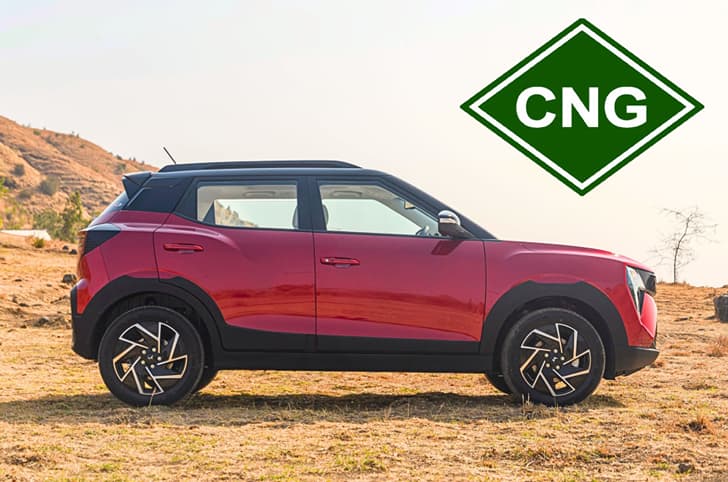

Mahindra's XUV 3XO ZNG enters the CNG compact SUV segment at ₹9.99 lakh with 24.7 km/kg ARAI mileage, 200 Nm torque, and a twin-cylinder underfloor CNG setup that retains 270 litres of boot space.
The Mahindra XUV 3XO ZNG is the first factory-fitted CNG passenger vehicle from Mahindra & Mahindra, launched on 15 October 2026 at an introductory price of ₹9.99 lakh (ex-showroom). It enters a compact SUV CNG segment previously dominated by the Tata Nexon iCNG and Maruti Suzuki Brezza S-CNG.
With a claimed ARAI efficiency of 24.7 km/kg and 200 Nm of torque available in both CNG and petrol modes, Mahindra positions the XUV 3XO ZNG as the segment's performance benchmark. Here is how it stacks up against its two direct rivals at launch:
| Feature | Mahindra XUV 3XO ZNG | Tata Nexon iCNG | Maruti Brezza S-CNG |
|---|---|---|---|
| Starting CNG price (ex-showroom) | ₹9.99 lakh | ~₹10.00 lakh (approx.) | ~₹9.49 lakh (approx.) |
| CNG mileage (ARAI claim) | 24.7 km/kg | ~24.0 km/kg | ~25.51 km/kg |
| Engine | 1.2L mStallion TCMPFi Turbo-Petrol | 1.2L Revotron Turbo-Petrol | 1.5L K-Series Petrol (NA) |
| Max power (CNG mode) | 113 hp / 82 kW | ~100 hp (approx.) | ~89 hp (approx.) |
| Max torque (CNG mode) | 200 Nm | ~170 Nm (approx.) | ~122 Nm |
| CNG cylinder setup | Twin-cylinder, underfloor | Twin-cylinder, under boot floor | Single-cylinder, in boot |
| Boot space (with CNG) | 270 litres | ~330 litres (approx.) | ~160 litres (approx.) |
| Gearbox | 6-speed MT only | 6-speed MT only | 5-speed MT only |
| Factory-fitted CNG | Yes | Yes | Yes |
| NCAP safety rating | 5-star Bharat NCAP | 5-star Global NCAP | Not rated (Bharat NCAP) |
| Key weakness | No automatic gearbox option | Boot floor raised slightly | Significant boot loss; naturally aspirated engine |
Prices are ex-showroom India. Mileage figures are manufacturer ARAI claims, not real-world tested numbers. Tata Nexon iCNG and Maruti Brezza S-CNG figures are based on publicly available data at time of publication; verify with respective dealers before purchase.
What exactly is the Mahindra XUV 3XO ZNG and how is it different from the standard XUV 3XO?
The XUV 3XO ZNG is the CNG-powered variant of Mahindra's XUV 3XO compact SUV, distinguished by ZNG badging on the tailgate and an underfloor twin-cylinder CNG storage system. It represents the fourth powertrain option on the XUV 3XO platform, sitting alongside petrol, diesel and electric versions. Few compact SUVs offer such diverse powertrain choices.
Mechanically, the ZNG pairs the 1.2-litre mStallion TCMPFi turbocharged petrol engine—the MPFI variant, not the costlier direct-injection unit—with a 6-speed manual gearbox. Mahindra has re-calibrated the turbocharger and ECU mapping for the bi-fuel setup, claiming identical 113 hp and 200 Nm of torque in both petrol and CNG modes. Most CNG cars lose 10–15% power in gas mode; Mahindra's zero-loss claim is notable, though real-world driving will ultimately validate it.
The 10-bar CNG injection pressure system—higher than the conventional 6–8 bar setups in rival vehicles—maintains combustion quality and efficiency in CNG mode. Automatic fuel switching engages when CNG supply runs low, shifting to petrol without driver input. An integrated gas-leak detection system adds safety, automatically reverting to petrol if a leak occurs.
Visually, the ZNG is identical to the standard XUV 3XO except for badging. All existing body styling, roof options and colour choices remain unchanged.
What are the XUV 3XO ZNG variant prices and what do you get at each level?
Four variants are available, all priced ex-showroom:
- MX EDGE — ₹9.99 lakh
- RevX EDGE (O) — ₹10.79 lakh
- AX5 — ₹11.19 lakh
- RevX A — ₹12.27 lakh
The base MX EDGE at ₹9.99 lakh is the headline figure, though it is relatively stripped. Mahindra has standardised six airbags, Electronic Stability Control (ESC) and ISOFIX child-seat mounts across all variants—a meaningful safety baseline.
Mid-range variants add a 10.25-inch touchscreen, 10.25-inch digital instrument cluster, 360-degree camera, TPMS, three steering modes (Normal, Comfort, Sport), rear AC vents and 60:40 split rear seating. The top-spec RevX A brings twin 26.03 cm screens, a Skyroof panoramic sunroof, Dolby Atmos audio, black leatherette seats, connected LED tail lamps and push-button start.
The XUV 3XO's five-star Bharat NCAP rating for adult and child occupant protection applies to the platform—a genuine differentiator over the Maruti Brezza S-CNG, which has not been rated under Bharat NCAP.
One clear limitation: no automatic gearbox option exists for the ZNG. Buyers wanting a CNG car with an AMT or DCT will need to look elsewhere. Neither the Nexon iCNG nor the Brezza S-CNG offers an automatic either, so this gap is segment-wide rather than specific to Mahindra, though it matters for urban buyers navigating heavy stop-and-go traffic.
How does the twin-cylinder CNG setup affect boot space — and how does it compare to rivals?
Boot space represents the central trade-off in any CNG car, and the XUV 3XO ZNG handles it better than most. The underfloor twin-cylinder arrangement positions both CNG tanks beneath the rear luggage area rather than inside it, preserving a flat loading floor and 270 litres of usable boot space. The spare wheel relocates to an under-body mount.
This matters because the XUV 3XO already has one of the smaller boots in the compact SUV segment in petrol form. Tata pioneered this twin-cylinder underfloor philosophy with the Nexon iCNG, which also uses an underfloor layout and retains more usable boot space than single-cylinder setups, though exact figures vary by variant.
The Maruti Brezza S-CNG uses a single CNG cylinder mounted inside the boot, which significantly reduces cargo space. The Brezza S-CNG's boot shrinks to approximately 160 litres with the CNG cylinder in place, compared to its standard 328 litres—a genuine day-to-day inconvenience for families who regularly carry luggage, groceries or a pram.
The XUV 3XO ZNG's 270-litre figure sits between the Nexon iCNG and Brezza S-CNG in practical terms, though it leans closer to the Nexon's usability. For buyers prioritising boot space, the XUV 3XO ZNG and Nexon iCNG are the two sensible choices in this segment.
What is the running cost of the XUV 3XO ZNG versus the Nexon iCNG and Brezza S-CNG?
Running cost drives most CNG purchasing decisions, so the arithmetic deserves careful attention. Using Delhi CNG prices as a reference point (approximately ₹76 per kg at the time of writing—verify current prices with your local city gas distribution company):
Mahindra XUV 3XO ZNG (ARAI: 24.7 km/kg)
- Cost per km on CNG: ₹76 ÷ 24.7 = approximately ₹3.08/km
- Real-world efficiency typically runs 15–20% lower than ARAI claims, so expect ₹3.60–₹3.70/km in mixed driving
Tata Nexon iCNG (ARAI: ~24.0 km/kg)
- Cost per km on CNG: ₹76 ÷ 24.0 = approximately ₹3.17/km
- Real-world: approximately ₹3.70–₹3.85/km
Maruti Brezza S-CNG (ARAI: ~25.51 km/kg)
- Cost per km on CNG: ₹76 ÷ 25.51 = approximately ₹2.98/km
- Real-world: approximately ₹3.50–₹3.65/km
A petrol compact SUV averaging 14 km/l with petrol at approximately ₹96/litre (Delhi) costs around ₹6.86/km—more than double the CNG running cost. Over 1,500 km per month, a CNG buyer saves roughly ₹5,000–₹6,000 per month versus petrol, meaning the CNG premium over an equivalent petrol variant (typically ₹80,000–₹1,00,000) recovers in 12–18 months of regular use.
The Brezza S-CNG edges the XUV 3XO ZNG on pure ARAI mileage by roughly 0.8 km/kg, but the XUV 3XO ZNG's turbocharged engine delivers significantly more torque, translating to less gear-hunting and a more relaxed driving experience on highways and inclines.
CNG station availability varies significantly by city. Delhi, Mumbai, Pune, Ahmedabad and Surat have dense networks. In smaller cities and on highway routes, CNG stations can be sparse, making the automatic petrol fallback on the XUV 3XO ZNG a practical feature. Buyers in cities with thin CNG infrastructure should map their regular routes before committing.
How does the XUV 3XO ZNG's engine performance compare to the Nexon iCNG and Brezza S-CNG?
Performance is where the XUV 3XO ZNG makes its clearest case. Mahindra claims 200 Nm of torque in CNG mode, described as the highest torque output among CNG passenger vehicles in India. The claimed 0–60 kmph sprint in 4.9 seconds in CNG mode is a manufacturer figure, not independently tested, but it suggests the turbocharger delivers meaningful work even on gas.
The Tata Nexon iCNG uses a 1.2-litre Revotron turbocharged engine in its CNG form, also benefiting from turbo assistance. This makes it a more direct rival in driving character than the Brezza. The Nexon iCNG produces approximately 100 hp in CNG mode, versus the XUV 3XO ZNG's claimed 113 hp. Both turbocharged engines handle overtaking and highway driving more confidently than naturally aspirated CNG cars.
The Maruti Brezza S-CNG uses a 1.5-litre naturally aspirated K-Series engine. In CNG mode, naturally aspirated engines feel noticeably less responsive than turbocharged ones, particularly at higher speeds or when loaded. The Brezza S-CNG works as a competent city commuter, but it is not the car for a loaded highway run. Its strength lies in the Maruti dealer network and the brand's established CNG reliability—Maruti has fitted factory CNG kits under its S-CNG programme for over a decade, and its service network is unmatched.
Mahindra is new to factory-fitted CNG for passenger vehicles. The XUV 3XO ZNG is Mahindra's first mainstream CNG passenger car, though the company has offered CNG on commercial pickups and older models like the Logan and Verito via conversion kits. Long-term reliability data for the ZNG's CNG system will emerge over time, and early buyers accept some uncertainty.
What safety features does the XUV 3XO ZNG offer, and is it genuinely safe for a CNG car?
The XUV 3XO ZNG has a strong safety story. The underlying XUV 3XO platform has received a five-star Bharat NCAP rating for both adult and child occupant protection—among the best results in the compact SUV segment.
Standard across all ZNG variants: six airbags, Electronic Stability Control (ESC), ABS with EBD, four-wheel disc brakes, ISOFIX child-seat mounts, three-point seat belts for all occupants, seat-belt reminder system and speed alert system.
CNG-specific safety includes an integrated gas-leak detection system that automatically switches to petrol mode if a leak occurs, and automatic fuel-switching when CNG runs low. These features are not unique to the XUV 3XO ZNG—Tata's iCNG and Maruti's S-CNG systems include similar protections—but their presence as factory-fitted, integrated systems matters. Aftermarket CNG kits typically lack gas-leak detection, making factory-fitted CNG a stronger choice over dealer-fitted conversions.
The Tata Nexon iCNG carries a five-star Global NCAP rating on its base platform. The Maruti Brezza S-CNG has not been rated under Bharat NCAP, though Maruti's S-CNG systems have a strong safety track record.
Why is the XUV 3XO ZNG strategically important for Mahindra — and what does it mean for CAFE norms?
The XUV 3XO ZNG is more than a product launch; it is a regulatory play. As Autocar India noted, Mahindra's sales mix is heavily diesel-weighted, creating challenges as India's CAFE (Corporate Average Fuel Economy) III norms take effect from April 2027. CNG vehicles, alongside EVs, help manufacturers lower their fleet-average CO2 emissions.
Mahindra has crossed 2.5 lakh cumulative XUV 3XO sales in under two-and-a-half years, giving the CNG variant a large existing customer base—buyers already familiar with the platform who may be considering a switch from petrol or diesel for running-cost reasons. The ZNG also provides Mahindra a credible answer to the Tata Nexon iCNG, which has been the only turbocharged CNG compact SUV in the segment until now.
Competitively, the XUV 3XO ZNG's entry makes the compact CNG SUV segment genuinely three-way. The Maruti Brezza has crossed 1.5 million cumulative sales as a nameplate, and its S-CNG variant appeals to buyers prioritising running costs and Maruti's service reach over outright performance. The Nexon iCNG attracts buyers wanting turbo performance and Tata's twin-cylinder boot-space advantage. The XUV 3XO ZNG now competes directly with both, offering the strongest torque claim and a five-star NCAP-rated platform—but asking buyers to trust a brand new to factory CNG for passenger cars.
Should you buy the XUV 3XO ZNG, Nexon iCNG or Brezza S-CNG?
The right choice depends on your priorities.
Choose the XUV 3XO ZNG if: you want the most powerful CNG compact SUV available, you value the five-star Bharat NCAP safety rating, and you are comfortable being an early adopter of Mahindra's CNG system. The ₹9.99 lakh entry price is competitive, and the twin-cylinder underfloor setup preserves meaningful boot space. The turbo engine makes highway driving genuinely enjoyable in CNG mode—not a compromise you merely tolerate.
Choose the Tata Nexon iCNG if: you want a turbocharged CNG compact SUV with an established track record. Tata's iCNG twin-cylinder system has been in the market longer, and the Nexon's safety credentials are similarly strong. If the XUV 3XO ZNG's pricing at your preferred variant approaches the Nexon iCNG, the Nexon's longer CNG reliability history becomes a meaningful tiebreaker.
Choose the Maruti Brezza S-CNG if: your city has a dense CNG network, you prioritise the lowest possible running cost per km, and Maruti's unmatched service network matters more than outright performance. The Brezza S-CNG's naturally aspirated engine is less exciting, and the single-cylinder boot intrusion is a real daily inconvenience, but Maruti's decade-plus of S-CNG experience and the sheer density of its service centres across India—including smaller towns—offers genuine advantages that spec sheets cannot fully capture.
For buyers exploring the broader CNG compact SUV segment under ₹10 lakh, the XUV 3XO ZNG's base variant at ₹9.99 lakh is the most feature-rich and powerful entry point available. For a broader view of the best CNG SUVs under ₹30 lakh in India, the segment now has three credible factory-fitted options for the first time.
Bookings for the XUV 3XO ZNG open on 20 October 2026, with deliveries beginning the same day. Test drives started on 15 October across authorised Mahindra dealerships.
Sources
- Mahindra Launches XUV 3XO CNG at ₹9.99 Lakh — ETAuto
- Mahindra XUV 3XO CNG to debut on October 15 — Autocar India
- Mahindra XUV 3XO CNG launched: Price, changes in most powerful CNG car in segment — Times of India
- Mahindra takes on Tata, Maruti in CNG SUV race with XUV 3XO — The Hindu BusinessLine
- Best SUVs With a CNG Option Under 30 Lakh in India (2026) — AutoForumIndia
- Best CNG Compact SUVs Under ₹10 Lakh in India — AutoForumIndia
- Mahindra XUV 3XO — Official Model Page