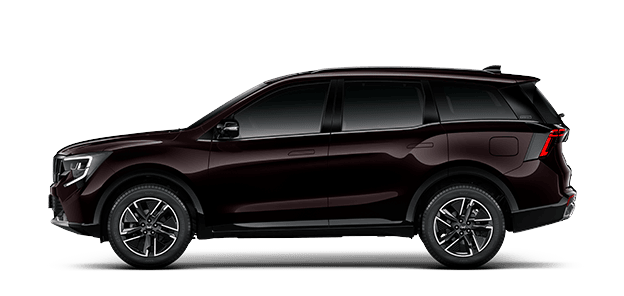

Mahindra XUV 3XO CNG debuts October 15, 2026 with a factory-fitted kit on the 1.2L MPFI engine; price expected ~Rs 1 lakh over petrol; only the third CNG compact SUV in India.
When Does Mahindra's XUV 3XO CNG Launch in India? October 15, 2026 Debut, Expected Price and Mileage
Mahindra will debut the XUV 3XO CNG on October 15, 2026, making it only the third compact SUV in India to offer a factory-fitted CNG powertrain — a segment currently occupied solely by the Maruti Suzuki Brezza S-CNG and the Tata Nexon iCNG. Autocar India first reported the development in April 2026, and a brand teaser confirmed the October 15 date. Prices are expected to be announced in the weeks following the debut, with the CNG variant likely commanding a premium of approximately Rs 1 lakh over the equivalent petrol trim.
The XUV 3XO CNG is a factory-fitted compressed natural gas variant of Mahindra's most affordable SUV, offered alongside — not replacing — the existing petrol, diesel, and electric powertrain options. This gives the XUV 3XO one of the broadest powertrain menus in the compact SUV segment, comparable only to the Tata Nexon.
How Does the XUV 3XO CNG Stack Up Against Its Rivals?
Here is a snapshot of the three factory-fitted CNG compact SUVs in India as of October 2026. Note that ARAI mileage figures for the XUV 3XO CNG are not yet officially disclosed; the figures below for rivals are manufacturer (ARAI) claims.
| Model | CNG Kit Type | ARAI Mileage (CNG) | Petrol Mileage (ARAI) | Starting CNG Price (Ex-showroom) | Boot Space (CNG) | Key Weakness |
|---|---|---|---|---|---|---|
| Mahindra XUV 3XO CNG | Factory-fitted (expected) | TBA (not yet disclosed) | 17.96–21.2 km/l (petrol variants) | ~Rs 1L premium over petrol base (est.) | Smallest boot in segment; tank packaging TBA | Already smallest boot in segment; CNG tank will reduce it further |
| Maruti Suzuki Fronx S-CNG | Factory-fitted | ~28.51 km/kg (ARAI claim) | 21.79 km/l (petrol) | ~Rs 9.99–10.99 lakh | Reduced boot vs petrol; single cylinder under boot | No automatic gearbox on CNG; lower power on CNG |
| Maruti Suzuki Brezza S-CNG | Factory-fitted | ~25.51 km/kg (ARAI claim) | 17.38–19.80 km/l (petrol) | ~Rs 9.99 lakh onwards | Reduced boot; single cylinder | No AMT/AT on CNG; power drop vs petrol |
| Tata Nexon iCNG | Factory-fitted | ~24 km/kg (ARAI claim) | 17.0–18.4 km/l (petrol) | ~Rs 10.00 lakh onwards | Twin-cylinder under boot floor; boot largely preserved | Twin-cylinder adds weight; CNG range lower than Fronx |
Prices are approximate ex-showroom figures based on available market data. ARAI mileage figures are manufacturer claims and real-world returns will be lower. XUV 3XO CNG figures are estimates pending official announcement.
For a broader look at how these models compare in the buying decision, see our guide on Best CNG Compact SUVs Under ₹15 Lakh in India and 6 Best CNG Compact SUVs Under ₹20 Lakh.
Which Engine Will the XUV 3XO CNG Use?
The CNG kit is expected to be paired with the 111hp 1.2-litre MPFI turbo-petrol engine rather than the more powerful 131hp 1.2-litre direct-injection (TGDi) unit, per Autocar India. This is a technically logical choice: MPFI engines inject fuel into the intake manifold, making them structurally simpler and cheaper to adapt for CNG. Direct-injection engines, by contrast, spray fuel directly into the combustion chamber at high pressure, which makes integrating a CNG system significantly more complex and expensive — the two fuel systems need to coexist without compromising injection timing or combustion efficiency.
Running on CNG will reduce power output compared to the petrol figure. This is a universal trade-off across all factory-fitted CNG cars in India — the Maruti Fronx S-CNG, for instance, produces around 87.4hp on CNG versus 100hp on petrol. Expect a similar or slightly larger gap on the XUV 3XO given the turbocharged base engine. Buyers who prioritise performance over running costs should factor this in.
Mahindra has not disclosed the CNG-specific power output, torque figures, or ARAI mileage rating as of October 8, 2026. These will likely be revealed at or after the October 15 debut.
What Happens to the Boot Space?
This is the most pressing practical question for XUV 3XO buyers. Autocar India notes that the XUV 3XO already has the smallest boot in the compact SUV segment, and a CNG cylinder will reduce it further. How much depends on the packaging approach Mahindra chooses.
Two broad options exist:
Single cylinder under the boot floor: This is the traditional approach used by Maruti on the Brezza and Fronx S-CNG. It is cost-effective but noticeably eats into luggage capacity. The Fronx S-CNG, for example, loses a meaningful chunk of its already modest boot volume to the cylinder.
Twin-cylinder setup under the boot floor: Tata popularised this with the Nexon iCNG, splitting the tank into two smaller cylinders that sit lower and flatter under the boot. This largely preserves usable boot depth, though it adds weight and complexity. The Nexon iCNG's boot is significantly more practical than a single-cylinder alternative would be.
Autocar India reports that it remains to be seen which route Mahindra takes, and that either option "may require some re-engineering" given the XUV 3XO's existing packaging constraints. If Mahindra opts for a single cylinder, the boot penalty could be severe enough to be a genuine deal-breaker for families who use the car for weekend luggage. If it goes twin-cylinder, the cost premium over the petrol variant could be higher than the estimated Rs 1 lakh.
This weakness deserves equal airtime alongside the XUV 3XO CNG's strengths: the car enters the CNG segment starting from a disadvantaged position on boot space, and the solution Mahindra picks will define whether the CNG variant is a practical daily driver or a compromise.
What Will the XUV 3XO CNG Cost, and What Are the Running Cost Savings?
Exact pricing will be confirmed after the October 15 debut. Autocar India estimates a premium of approximately Rs 1 lakh over the equivalent petrol variant. Given that the XUV 3XO petrol range currently starts at Rs 7.79 lakh (ex-showroom) and the MPFI petrol variants sit in the Rs 7.79–10.59 lakh range per Mahindra's official press release data, the CNG variant could realistically be priced between Rs 9 lakh and Rs 11.5 lakh depending on the trim it is based on.
To understand why buyers accept that premium, the running cost arithmetic matters. Using Delhi CNG prices as a reference point (approximately Rs 75–76 per kg as of October 2026) and assuming a conservative real-world CNG mileage of 18–20 km/kg (ARAI figures will be higher, but real-world returns on turbocharged CNG engines tend to be lower than ARAI claims):
- CNG cost per km: Rs 75 ÷ 19 km/kg ≈ Rs 3.95 per km
- Petrol cost per km (Delhi petrol ~Rs 95/l, real-world ~15 km/l): Rs 95 ÷ 15 ≈ Rs 6.33 per km
- Saving per km: approximately Rs 2.38
- Break-even on Rs 1 lakh premium: approximately 42,000 km, or roughly 2.5–3 years for a typical 15,000 km/year driver
CNG cars have gained traction in India's urban market because these savings are real, but they require consistent CNG availability — which remains uneven outside major metros and highway corridors.
For comparison, the Maruti Fronx S-CNG claims 28.51 km/kg (ARAI), which at Rs 75/kg works out to roughly Rs 2.63 per km — a lower running cost than what the XUV 3XO CNG is likely to achieve given its turbocharged engine's higher fuel consumption. The Fronx's naturally aspirated CNG setup is inherently more fuel-efficient, even if the XUV 3XO offers more performance and features.
How Does the Fronx S-CNG Compare as the Direct Price Rival?
The Maruti Suzuki Fronx S-CNG is a factory-fitted CNG variant of Maruti's compact crossover SUV, positioned in the same price band as the XUV 3XO CNG. It is the most direct competitor on price and segment.
The Fronx S-CNG's strengths are clear: an ARAI-claimed 28.51 km/kg ranks among the best in the compact SUV space, Maruti's CNG service network is the most mature in India, and the factory warranty is fully intact. The starting price of around Rs 9.99–10.99 lakh is competitive.
But the Fronx S-CNG has honest weaknesses too. It offers no automatic gearbox option on CNG — buyers wanting a CNG Fronx must take the manual. Power drops noticeably on CNG. And the Fronx's dimensions are smaller than the XUV 3XO, meaning less cabin space and a more car-like feel rather than a true SUV stance.
The XUV 3XO CNG counters with a larger, more feature-rich cabin, a stronger brand identity in the SUV space, and the credibility of Mahindra's factory-fitted kit. The trade-off is the boot space concern and the fact that Mahindra's CNG service infrastructure is being built from scratch for passenger vehicles — the XUV 3XO will be the brand's first CNG car in its current line-up.
For buyers weighing these two, our Best CNG Compact SUVs Under ₹10 Lakh guide covers the entry-level end of this decision, while the Best SUVs With a CNG Option Under 30 Lakh guide covers the wider segment.
Why Is Mahindra Entering CNG Now?
The timing is strategic rather than opportunistic. Autocar India's analysis points to two structural drivers.
First, CAFE III norms come into effect from April 2027. These are significantly more stringent Corporate Average Fuel Economy standards that penalise manufacturers whose fleet average CO2 emissions exceed the threshold. Mahindra's sales mix is heavily diesel-weighted — a fuel type that, despite its efficiency, carries a CO2 disadvantage in regulatory calculations compared to CNG. Adding CNG variants helps balance the fleet average, alongside the brand's growing EV portfolio (BE 6, XEV 9e, XUV 3XO EV).
Second, the XUV 3XO has already sold over 2.5 lakh units in under 2.5 years, making it Mahindra's fastest SUV to reach that milestone per the brand's own press release. A CNG variant opens the car to a new buyer cohort — primarily high-mileage urban and peri-urban users who currently choose the Brezza CNG or Nexon iCNG by default because no Mahindra option exists.
Mahindra is not entirely new to CNG. The brand has offered CNG on its commercial pickup range and previously provided conversion kits for the Logan and Verito. The XUV 3XO CNG will be the first factory-fitted CNG passenger vehicle in Mahindra's current line-up, placing it alongside Maruti Suzuki, Hyundai, Tata, Kia, and Toyota as brands offering this option with full factory warranty coverage.
Is the Factory-Fitted CNG Kit Important for Warranty?
Yes, and this distinction matters significantly for buyers. A factory-fitted CNG kit is installed at the manufacturer's plant (or an authorised facility) before the car is sold, covered under the standard manufacturer warranty. Dealer-fitted or aftermarket kits, by contrast, typically void the engine warranty on the components affected by the CNG conversion, and the kit itself carries a separate, shorter warranty from the kit maker.
All three current compact SUV CNG options — the Brezza S-CNG, Fronx S-CNG, and Nexon iCNG — are factory-fitted, and the XUV 3XO CNG is expected to follow the same approach. This means the engine warranty, which Mahindra offers for up to 3 years or 1,00,000 km (whichever comes first on standard variants), should remain intact. Buyers should confirm this explicitly at the dealership when the car launches, as warranty terms can vary by variant.
What Are the Remaining Unknowns Before Buying?
Several critical data points will only be available after the October 15 debut or in the weeks following:
- ARAI mileage (km/kg): Without this, the running cost calculation above uses estimates. The ARAI figure will be the official benchmark, though real-world returns on a turbocharged CNG engine in city traffic will typically be 15–25% lower.
- Exact CNG variant pricing: The Rs 1 lakh premium estimate is a reasonable industry expectation, but Mahindra could price it more aggressively to take market share from the Brezza and Fronx.
- Boot space impact: The single vs. twin-cylinder decision will determine how practical the CNG variant is for families. This is the single most important unknown for buyers who carry luggage regularly.
- Which trim levels get CNG: Mahindra may restrict CNG to specific variants (likely mid-spec MPFI trims), which will affect the feature-to-price calculation.
- CNG-specific power output: The derating from 111hp on petrol to the CNG figure will affect real-world driving feel, particularly on highways and inclines.
Buyers in cities with dense CNG networks — Delhi-NCR, Mumbai, Ahmedabad, Pune — stand to benefit most. Those in cities with sparse CNG infrastructure should weigh the convenience cost of detours to CNG stations against the per-km savings.
Should You Wait for the XUV 3XO CNG or Buy a Rival Now?
This depends on your priority. If running cost is the primary driver and you need a car before the end of 2026, the Maruti Fronx S-CNG offers the best ARAI mileage in the compact SUV CNG space right now, a proven service network, and transparent pricing. The Tata Nexon iCNG is the better choice if boot space is non-negotiable, thanks to its twin-cylinder setup.
If you want the XUV 3XO's feature set, cabin size, and brand positioning — and you can wait until late 2026 for prices and full specifications — the October 15 debut will give you enough information to make a decision. Actual deliveries are expected before the end of 2026 per Autocar India's report.
The XUV 3XO CNG entering the market is genuinely significant for the segment. It is the first time a Mahindra passenger SUV will carry a factory CNG option, and it gives buyers a third credible choice in a space that has been a two-horse race between Maruti and Tata. Whether it wins on mileage, price, or practicality will depend on the specifications Mahindra reveals on October 15.
For the full context on how CNG compact SUVs compare across price bands, see our 5 Best CNG Cars in India (2026) guide and the dedicated Best CNG Compact SUVs Under ₹15 Lakh comparison.