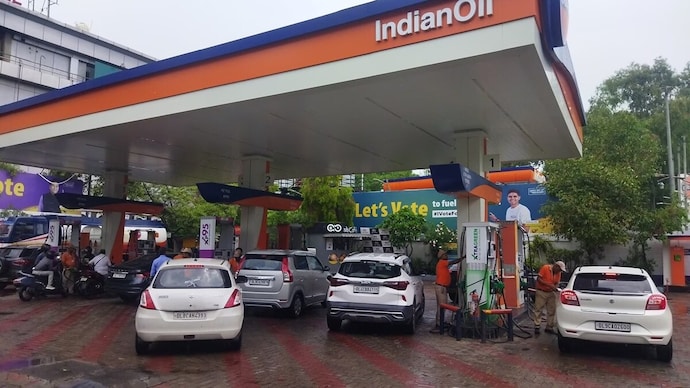

Delhi's non-BS-VI vehicle ban has spiked NCR CNG conversions by up to 50%; factory-fitted Maruti S-CNG cars offer a safer, warranty-backed alternative to aftermarket retrofits.
Delhi's entry ban on non-BS-VI vehicles registered outside the city has triggered a CNG conversion surge of up to 50% across the National Capital Region, according to reports from November 2026. The restriction — which bars BS-IV and older petrol and diesel vehicles registered in Noida, Gurugram, Faridabad and Ghaziabad from entering Delhi between November 1, 2026 and January 31, 2027 — has pushed hundreds of thousands of daily commuters to either convert their existing vehicles to CNG or consider buying a factory-fitted CNG car outright.
For buyers caught in this situation, the choice is not straightforward. A retrofit CNG kit costs significantly less upfront than a new car, but it comes with warranty implications, safety trade-offs and ongoing running-cost arithmetic that buyers must weigh carefully. Factory-fitted CNG cars — particularly Maruti Suzuki's S-CNG range — sidestep most of those concerns but require a larger initial outlay.
The table below compares the three most relevant factory-fitted CNG options in the market against the retrofit route, across the data points that matter most to an NCR commuter making this decision today.
| Option | CNG Mileage (ARAI, km/kg) | Approx. Entry Price (CNG variant) | Boot Space (CNG) | Kit Type | Warranty Impact |
|---|---|---|---|---|---|
| Maruti Suzuki Baleno S-CNG | 30.61 km/kg | ~₹9.45 lakh | Reduced (single cylinder under boot) | Factory-fitted | Full manufacturer warranty intact |
| Maruti Suzuki Dzire S-CNG | 33.73 km/kg | ~₹9.14 lakh | Reduced (single cylinder under boot) | Factory-fitted | Full manufacturer warranty intact |
| Maruti Suzuki Fronx S-CNG | 28.51 km/kg | ~₹9.99 lakh | Reduced (single cylinder under boot) | Factory-fitted | Full manufacturer warranty intact |
| Aftermarket retrofit (typical B-segment car) | 18–22 km/kg (real-world estimate; varies by kit and tuning) | ₹20,000–₹40,000 kit cost on existing car | Varies; cylinder often occupies full boot | Dealer/third-party fitted | Voids OEM powertrain warranty in most cases |
Prices are indicative ex-showroom figures; ARAI mileage figures are manufacturer claims and real-world numbers will be lower. Retrofit mileage is an estimate based on typical sequential CNG kit performance and is not ARAI-certified.
Why has Delhi's vehicle ban suddenly made CNG conversions so urgent?
The trigger is a specific regulatory change, not a general pollution awareness drive. Under Delhi's revised Graded Response Action Plan (GRAP) rules effective November 1, 2026, vehicles registered outside Delhi that conform to BS-IV or older emission standards are prohibited from entering the city until January 31, 2027. Only BS-VI, CNG and electric vehicles — along with emergency services — are exempt.
This is defined as a seasonal ban, not a permanent one, but the Delhi government has confirmed the measures will remain in place until January 31, 2027, and the regulatory direction is clearly toward tighter restrictions in subsequent winters. The 'No PUC, No Fuel' rule — already in force in Delhi since 2025 — has also been extended to the rest of NCR from October 1, 2026, adding another compliance layer for vehicle owners.
For a commuter who lives in Noida or Gurugram and drives into Delhi daily for work, the math is blunt: a BS-IV car that cannot enter Delhi is effectively stranded at the border for three months every year. Converting it to CNG grants an exemption. That is why CNG conversion workshops across Ghaziabad, Faridabad, Noida and Gurugram have reported demand spikes of up to 50% in the weeks following the November 1 implementation.
The longer-term regulatory picture makes the urgency sharper. Delhi will stop registering diesel, petrol and CNG light goods vehicles (N1 category) from January 1, 2027, according to Times of India reporting on the city's phased vehicle rules, and high-density NCR districts including Gurugram and Noida will follow from July 1, 2027. From April 1, 2028, only electric two-wheelers will be permitted for new registration in Delhi. The city is on a clear trajectory toward zero-emission transport, and CNG is explicitly positioned as a transitional fuel — not a permanent one.
What does a retrofit CNG conversion actually cost, and what are the real risks?
A retrofit CNG conversion is defined as the installation of an aftermarket compressed natural gas system — typically a sequential injection kit — onto a petrol vehicle by a third-party workshop or dealer, as opposed to a factory-engineered system installed by the original manufacturer on the production line.
Costs for a typical B-segment car (hatchback or sedan) range from ₹20,000 to ₹40,000 depending on the kit brand, cylinder size and workshop. The cylinder is usually mounted in the boot, and depending on its size, can consume anywhere from half to the entire usable boot space. A 60-litre water-equivalent cylinder — the most common size for a hatchback — will give a range of roughly 200–250 km on a full fill at real-world efficiency, which is meaningfully less than the 300+ km range a factory-fitted system with a properly tuned ECU can deliver.
The warranty issue is the one most buyers underestimate. Most OEM warranties explicitly exclude powertrain damage caused by the use of non-OEM fuel systems. If a retrofit CNG kit causes valve damage, fuel injector wear or ECU faults — all documented failure modes in poorly installed kits — the manufacturer will not cover the repair. The kit installer's own warranty, typically one to two years, covers the kit hardware but not consequential engine damage.
There is also a safety dimension. Factory-fitted CNG systems are engineered with the vehicle's crash structure, fuel line routing and ECU calibration in mind. Aftermarket kits, even from reputable brands, are installed on vehicles whose chassis was not designed around them. Cylinder mounting points, solenoid valve placement and high-pressure line routing all matter in a collision. This is not a theoretical concern — it is why Maruti Suzuki, Hyundai and Tata Motors have all invested in factory-fitted systems rather than endorsing dealer retrofits.
How do Maruti Suzuki's S-CNG factory-fitted cars compare for an NCR buyer?
Maruti Suzuki's S-CNG range is defined as a factory-engineered compressed natural gas system developed in-house by Maruti Suzuki India, featuring a specially tuned ECU, factory-mounted cylinder and integrated safety systems, installed at the manufacturing stage rather than as an aftermarket addition. Every S-CNG car carries the full manufacturer warranty and is ARAI-certified for its CNG mileage claim.
For an NCR buyer choosing between a retrofit on an existing car and a new purchase, the S-CNG range offers three relevant options in the sub-₹12 lakh bracket:
Maruti Suzuki Dzire S-CNG leads the range in mileage, with an ARAI-certified figure of 33.73 km/kg — the highest of any factory-fitted CNG car in its segment. The CNG variant starts at approximately ₹9.14 lakh (ex-showroom). The boot space is reduced by the under-boot cylinder placement, which is a genuine daily-use inconvenience for a family sedan. The Dzire S-CNG is also only available with a 5-speed manual gearbox in the CNG variant; the AMT option is not offered with CNG.
Maruti Suzuki Baleno S-CNG returns an ARAI-certified 30.61 km/kg and starts at approximately ₹9.45 lakh. It is a premium hatchback with a larger cabin than the Dzire, but the same boot-space trade-off applies. The Baleno S-CNG is also manual-only.
Maruti Suzuki Fronx S-CNG is the compact SUV option, with an ARAI-certified 28.51 km/kg and a starting price of approximately ₹9.99 lakh. The Fronx's higher ride height and SUV body style make it popular in NCR, but its CNG mileage is the lowest of the three S-CNG models listed here, and the boot is noticeably compromised.
The honest weakness across all three S-CNG models is the same: the cylinder sits in the boot, not under the floor. This is a single-cylinder configuration, not the twin-cylinder under-floor setup that Tata Motors uses in its iCNG cars. The practical result is a boot that loses roughly 100–150 litres of usable space in CNG mode. For a family that regularly carries luggage or groceries, this is a real-world inconvenience that the ARAI mileage figure does not capture.
How does the running cost arithmetic actually work for an NCR commuter?
Running cost is where CNG cars make their case most concretely. Using Delhi CNG prices as of late 2026 — approximately ₹75–78 per kg — and petrol at approximately ₹95–97 per litre, the numbers look like this:
For the Maruti Dzire S-CNG at 33.73 km/kg (ARAI claim; assume 25–27 km/kg real-world):
- At ₹76/kg and 26 km/kg real-world: cost per km = ₹76 ÷ 26 = ₹2.92/km
- Petrol equivalent (Dzire petrol, ~22 km/l real-world): ₹96 ÷ 22 = ₹4.36/km
- Saving per km: approximately ₹1.44
- For a commuter covering 60 km/day (typical Delhi-NCR round trip): daily saving ≈ ₹86, monthly saving ≈ ₹2,580
For a retrofit CNG kit on a BS-IV petrol hatchback at 20 km/kg real-world:
- At ₹76/kg: cost per km = ₹76 ÷ 20 = ₹3.80/km
- The retrofit saves money versus petrol but delivers meaningfully worse per-km economics than a factory-tuned S-CNG system
The retrofit's upfront cost of ₹25,000–₹35,000 will be recovered in fuel savings within 8–12 months at typical NCR commute distances — but only if the engine remains healthy and no warranty-excluded repairs are needed. A single powertrain repair bill can erase two to three years of fuel savings.
For a buyer who is already considering a new car purchase, the factory-fitted CNG premium over a base petrol variant is typically ₹80,000–₹1,10,000. At ₹1.44/km savings versus petrol, that premium is recovered in roughly 55,000–75,000 km of CNG driving — achievable in three to four years at NCR commute volumes.
What about Tata's iCNG cars and Hyundai's CNG options — how do they compare?
Tata Motors offers its iCNG system on the Tiago iCNG and Tigor iCNG. The defining technical difference is Tata's twin-cylinder configuration: two smaller cylinders are mounted under the boot floor rather than a single large cylinder in the boot. This under-floor twin-cylinder CNG setup preserves the majority of the boot's usable space — a genuine advantage over Maruti's single-cylinder layout.
The Tiago iCNG returns an ARAI-certified 26.49 km/kg and is priced from approximately ₹8.09 lakh (ex-showroom). The Tigor iCNG returns 24.09 km/kg and starts at approximately ₹8.69 lakh. Both are factory-fitted and carry full Tata warranty. The trade-off with Tata's iCNG cars is that the mileage figures are lower than the Maruti S-CNG equivalents, and the Tiago's cabin is more compact than the Baleno.
Hyundai offers the Grand i10 Nios CNG and the Aura CNG as factory-fitted options. The Grand i10 Nios CNG returns an ARAI-certified 26.08 km/kg and is priced from approximately ₹8.20 lakh. The Aura CNG returns 25.35 km/kg from approximately ₹8.40 lakh. Hyundai's CNG systems are factory-fitted and warranty-backed, but the mileage figures trail the Maruti S-CNG range.
For an NCR buyer whose primary concern is maximising CNG range and minimising running costs, the Maruti Dzire S-CNG's 33.73 km/kg ARAI claim is the benchmark. For a buyer who prioritises boot space and can accept lower mileage, Tata's twin-cylinder iCNG setup is the more practical daily-use choice. Hyundai sits in the middle on both counts.
What are the CNG station availability realities in NCR?
CNG infrastructure in Delhi-NCR is among the best in India, but it is not uniform. Delhi city itself has a dense network of CNG stations operated by Indraprastha Gas Limited (IGL), with over 600 stations across the capital. Noida, Gurugram, Faridabad and Ghaziabad have progressively expanded their IGL and Haryana City Gas networks over the past three years, but station density in outer NCR areas and on expressway corridors remains thinner than within Delhi.
The practical implication for a CNG car owner in NCR: within Delhi and the major NCR cities, range anxiety is not a significant concern. A factory-fitted CNG car with a 60-litre cylinder (water equivalent) and 25+ km/kg real-world efficiency will cover 250–300 km on a full fill, which is more than enough for most commuters. On highway trips — say, Delhi to Jaipur or Delhi to Chandigarh — CNG availability on national highways has improved but is not yet as reliable as petrol. Most factory-fitted CNG cars retain a petrol tank for exactly this reason; the switch between fuels is automatic or manual depending on the model.
The 'No PUC, No Fuel' rule now extended across NCR from October 1, 2026 adds a compliance requirement: CNG cars, like petrol cars, require a valid Pollution Under Control Certificate to fill up. This is a minor administrative task but one that NCR commuters need to stay current on.
Should you retrofit your existing car or buy a factory-fitted CNG car?
The answer depends on three variables: the age and condition of your existing car, your monthly commute distance and your budget.
Retrofit makes sense if: Your existing car is BS-VI (and therefore already exempt from the Delhi entry ban), is in good mechanical condition, has fewer than 60,000 km on the odometer and you plan to keep it for at least three more years. In this scenario, a quality sequential CNG kit from a reputable installer — with proper ECU tuning — will deliver acceptable running costs and the entry ban is not your trigger. If your car is BS-IV and you are retrofitting purely to get past the Delhi border check, you are solving a short-term problem (the seasonal ban) while creating a long-term one (warranty voidance, engine wear).
Factory-fitted CNG makes sense if: You are already in the market for a new car, your existing car is BS-IV or older and in declining condition, or you drive more than 50 km per day in NCR. The economics of a factory-fitted car are better over a five-year ownership horizon, the mileage figures are higher, the warranty is intact and the safety engineering is superior. For buyers looking at the best CNG hatchbacks under ₹15 lakh or the best CNG cars in India overall, the factory-fitted route is the cleaner choice in every sense.
One scenario where the retrofit-versus-new-car calculus gets complicated: if your BS-IV car is otherwise in excellent condition and has significant resale value, scrapping it for a new CNG purchase may not be financially rational. In that case, upgrading to a BS-VI petrol car (which is exempt from the Delhi ban) and keeping the CNG option for a future purchase may be the most pragmatic path.
What does the regulatory trajectory mean for CNG buyers beyond 2026?
CNG is explicitly a transitional fuel in Delhi's policy framework, not a permanent solution. The Times of India's reporting on Delhi's phased vehicle rules makes this clear: from January 1, 2027, Delhi will stop registering CNG light goods vehicles in the N1 category, and the electric-only mandate for heavier commercial vehicles follows in 2028. For private passenger cars, there is no announced end-date for CNG registrations in Delhi as of November 2026, but the direction of travel is toward electric.
For a buyer purchasing a factory-fitted CNG car today, the practical ownership horizon is five to seven years before the regulatory environment may make CNG cars less convenient or less valuable on resale. Within that window, the running cost savings versus petrol are substantial — ₹2,500–₹3,500 per month for a typical NCR commuter — and the entry ban exemption is an immediate, concrete benefit.
The buyers most exposed to risk are those spending ₹25,000–₹40,000 on a retrofit for a BS-IV car that is already eight to ten years old. They are paying to extend the life of a vehicle whose resale value is low, whose engine may not tolerate CNG well and whose compliance window with Delhi's rules is shrinking with each successive winter. For them, the retrofit is a short-term fix for a structural problem.
For buyers who want to explore the full range of factory-fitted CNG options — including CNG MPVs and CNG SUVs under ₹30 lakh — the NCR market in late 2026 has more factory-fitted choices than at any previous point, and the regulatory pressure is only going to make those choices more relevant.
The 50% spike in CNG conversion demand is a real signal of how many NCR commuters were caught unprepared by the November 1 rules. The smarter response — for anyone who can afford it — is to treat this moment not as a reason to retrofit, but as a reason to make the factory-fitted switch that the running cost arithmetic already justified.
Sources
- Delhi vehicle curbs drive CNG conversion rush across NCR; demand jumps up to 50%
- Delhi pollution rules from today: What changes on the road, at the pump and at work
- As Delhi looks to drive out pollution, know what's allowed and what's not
- Delhi pollution curbs from Nov 1: 50% WFH; will your car, bike from Noida, Gurugram, Ghaziabad be allowed? Full guide
- Delhi vehicle restrictions boost CNG conversions by 50% across NCR
- Maruti Suzuki S-CNG Cars — Official Page
- Best CNG Cars in India (2026)
- Best CNG Hatchbacks Under 15 Lakh in India (2026)
- Best CNG MPVs Under 15 Lakh in India (2026)
- Best SUVs With a CNG Option Under 30 Lakh in India (2026)