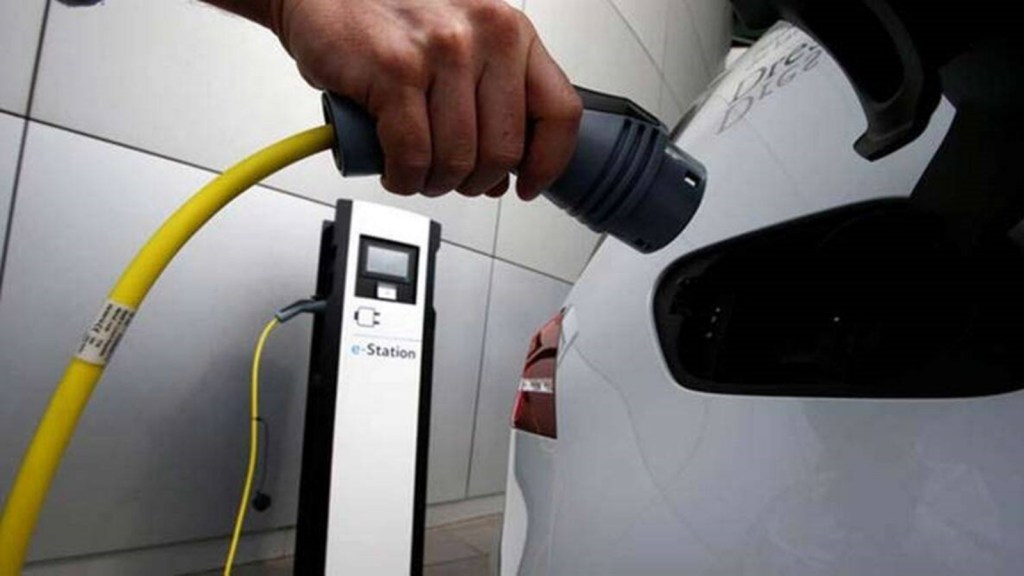

Petrol accounts for ~50% of India's car market in 2026 once hybrids are included, even as CNG (24.3%), EVs (7.8%), and hybrids (8.3%) collectively cross 40% for the first time.
Petrol still powered approximately 50% of India's passenger-vehicle market in August 2026 — even as CNG, EVs, and hybrids together crossed 41.9% of retail sales for the first time, according to JATO Dynamics' analysis of FADA registration data. The headline number is real, but understanding the story requires a closer look at how "alternative fuel" is defined — and who is actually winning the transition.
The August data covered 3,62,763 passenger-vehicle registrations. Conventional petrol models accounted for 1,49,484 units (41.2%), petrol mild hybrids added 25,070 units (6.9%), and strong hybrids contributed another 6,956 units (1.9%). Together, these three petrol-dependent categories totalled 1,81,510 registrations — exactly 50% of JATO's dataset. The crossover that FADA's headline suggested — alternatives overtaking petrol — was real only if hybrids are counted as non-petrol vehicles, which, as JATO's president Ravi Bhatia pointed out, they are not.
"Mild and strong hybrids use electric assistance differently, but both remain dependent on an internal-combustion engine and petrol," Bhatia told ETAuto. "They may reduce fuel consumption, but they should not be confused with vehicles that have moved away from petrol."
This distinction matters enormously for buyers choosing between CNG, EV, and petrol options — and for understanding where India's fuel transition actually stands.
How India's fuel mix actually breaks down in August 2026
The table below uses JATO Dynamics' August 2026 registration data alongside the broader FY26 and H1 FY27 trends to show the real fuel-mix picture:
| Fuel Category | Aug 2026 Units | Aug 2026 Share | FY26 Full-Year Share | Trend |
|---|---|---|---|---|
| Conventional Petrol | 1,49,484 | 41.2% | ~55% (est.) | Declining |
| Petrol Mild Hybrid | 25,070 | 6.9% | ~5% (est.) | Rising |
| Petrol Strong Hybrid | 6,956 | 1.9% | ~1.5% (est.) | Rising |
| Total Petrol-Dependent | 1,81,510 | 50.0% | ~61.5% | Declining |
| CNG | ~88,000 (est.) | ~24.3% | ~18% | Rising fast |
| Electric (4W) | ~28,000 (est.) | ~7.8% | ~4% | Rising fast |
| Diesel | — | ~7–8% | ~10% | Declining |
| Other/Hybrid counted as alt | — | ~8.3% | — | Rising |
JATO Dynamics data via ETAuto; CNG and EV share from Indian Express (June 2026 FADA data). FY26 full-year figures from The Hindu BusinessLine.
The trajectory is clear: petrol's dominance is eroding, but gradually. CNG is the single largest alternative-fuel category by volume, not EVs. Hybrids — often counted in the "alternative" column — remain petrol cars with better efficiency.
What does "alternative fuel" actually mean in India's market context?
"Alternative fuel" in India's automotive retail context means any powertrain that is not purely petrol or diesel — a definition that sweeps in CNG, EVs, and both mild and strong hybrids. This is the definition FADA uses when it reports that alternatives crossed 41.9% in August 2026.
JATO Dynamics applies a stricter standard: a vehicle has moved away from petrol only if it can operate without petrol as its primary energy source. Under this lens, mild hybrids (which cannot run without a petrol engine and merely recover braking energy) and strong hybrids (which can run on electricity for short distances but depend on petrol for range and recharging) both remain petrol vehicles. Only battery EVs and CNG cars — which can travel meaningful distances without burning petrol — qualify as genuine alternatives.
This definitional gap is not academic. It changes the market-share story from "alternatives have overtaken petrol" to "conventional petrol is losing share to a fragmented field of alternatives, none of which has yet achieved dominance."
Why is CNG the dominant alternative fuel, not EVs?
CNG accounted for 24.3% of passenger-vehicle retail sales in June 2026 — more than three times the EV share of 7.8% and nearly three times the hybrid share of 8.3%, according to Indian Express citing FADA data. In FY26 as a whole, combined CNG and EV sales reached approximately 12.3 lakh units, representing a 26% share of the passenger-vehicle market — up from roughly 22% a year earlier, per The Hindu BusinessLine.
CNG's lead over EVs in the four-wheeler segment comes down to three structural advantages:
Purchase price. A factory-fitted CNG variant of a mainstream hatchback or compact SUV typically costs ₹1–2 lakh more than its petrol counterpart — a premium that buyers recover within two to three years at current fuel prices. A comparable EV costs ₹5–15 lakh more upfront.
Running cost arithmetic. At a CNG price of approximately ₹90/kg in Delhi (mid-2026) and an ARAI-claimed efficiency of 30 km/kg, the running cost works out to ₹3/km. Petrol at roughly ₹105/litre and 18 km/l (a typical hatchback) costs ₹5.83/km. The saving is nearly ₹2.83/km — meaningful for a buyer covering 1,500 km/month, translating to roughly ₹4,200/month saved.
Infrastructure. India had 6,900+ CNG stations as of mid-2026, concentrated in Gujarat, Maharashtra, Delhi-NCR, and UP — regions that also happen to be India's highest-volume car markets. EV public charging, by contrast, numbered 52,718 stations nationally but with significant gaps in tier-2 and tier-3 cities, per Indian Express.
The West Asia war, which began in February 2026 and pushed petrol prices up by ₹7–11 across cities, has accelerated the shift to both CNG and EVs — but CNG's lower upfront cost means it has captured the larger share of first-time switchers.
Where do Maruti Suzuki's S-CNG models fit in this market shift?
Maruti Suzuki is the single largest player in India's CNG car market, and its factory-fitted S-CNG range — the Baleno, Fronx, Grand Vitara, Victoris, and XL6 — is central to why CNG commands 24%+ of passenger-vehicle sales. "Factory-fitted" is a specific designation: S-CNG is a CNG system designed, validated, and installed by Maruti Suzuki on the production line, not retrofitted by a dealer or aftermarket workshop. This matters because factory-fitted CNG preserves the manufacturer warranty, whereas dealer-fitted or aftermarket kits typically void it.
The S-CNG range spans every major segment:
| Model | Segment | CNG Mileage (ARAI claim) | Starting Price (CNG variant) | Key Weakness |
|---|---|---|---|---|
| Baleno S-CNG | Hatchback | 30.61 km/kg | ~₹8.49 lakh | Boot shrinks to ~148L from 318L; single cylinder |
| Fronx S-CNG | Compact SUV | 28.51 km/kg | ~₹9.46 lakh | Single cylinder; no AMT on CNG |
| Grand Vitara S-CNG | Mid-size SUV | 26.6 km/kg | ~₹14.99 lakh | Boot space reduced; no AWD on CNG |
| Victoris S-CNG | Mid-size SUV | ~26 km/kg (ARAI, claimed) | ~₹14.50 lakh (est.) | Newer model; limited real-world data |
| XL6 S-CNG | MPV | 26.3 km/kg | ~₹13.45 lakh | Third-row practicality compromised by cylinder |
Prices are indicative ex-showroom; verify with Maruti Suzuki dealers. Mileage figures are manufacturer ARAI claims, not real-world verified.
The Baleno S-CNG is the volume leader in the hatchback segment, with an ARAI claim of 30.61 km/kg among the highest in its class. The single-cylinder setup, however, shrinks the boot from a usable 318 litres to approximately 148 litres — a trade-off that hatchback buyers, who often need luggage space, feel acutely. For a buyer doing 1,500 km/month in Delhi at ₹90/kg CNG versus ₹105/litre petrol, the Baleno CNG saves approximately ₹4,100/month compared to the petrol variant doing 22 km/l — recovering the ₹1.5 lakh CNG premium in under three years.
The Fronx S-CNG competes in the CNG compact SUV segment against rivals like the Tata Nexon iCNG. The Nexon iCNG uses Tata's twin-cylinder setup, which distributes two smaller cylinders under the boot floor, preserving more usable cargo space than the Fronx's single large cylinder. The Nexon iCNG's ARAI claim is approximately 24 km/kg — lower than the Fronx's 28.51 km/kg — but its boot-space advantage is real and matters to family buyers. The Fronx also lacks an AMT option on the CNG variant, which is a drawback for city buyers who want automatic convenience with CNG economy.
In the mid-size SUV segment, the Grand Vitara S-CNG and the newer Victoris S-CNG face competition from the Hyundai Creta CNG (if launched) and, more directly, from the Tata Harrier iCNG. The Grand Vitara CNG's 26.6 km/kg claim is strong for the segment, but the absence of AWD on the CNG variant and reduced boot space are genuine limitations for buyers who want the full SUV experience.
The XL6 S-CNG holds a near-monopoly in the CNG MPV segment, with few direct factory-fitted CNG rivals at its price point. Its weakness is the cylinder placement, which compromises the third row's under-seat storage and makes the XL6 less practical as a seven-seater when the CNG tank is full.
Why is petrol still holding 50% share despite all of this?
Three structural reasons explain petrol's resilience.
Geography. CNG infrastructure, while growing, remains concentrated in a handful of states. Buyers in Rajasthan's smaller towns, across large parts of the Northeast, or in hill states like Himachal Pradesh and Uttarakhand face genuine range anxiety with CNG — not because the car is unreliable, but because CNG stations are sparse. For these buyers, petrol remains the only practical choice. India's auto registrations rose 19.4% in H1 FY27, and much of that growth came from tier-2 and tier-3 markets where CNG penetration is still low.
Segment mix. Premium and performance segments — compact SUVs priced above ₹15 lakh, mid-size SUVs, and luxury cars — are dominated by petrol and diesel. CNG's sweet spot remains hatchbacks and entry-level compact SUVs. As India's car market has shifted upward in average transaction price (the SUV share of total PV sales crossed 60% in FY26), a larger proportion of the market now sits in segments where CNG is either unavailable or less compelling.
E20 concerns and diesel resurgence. India Today's July 2026 analysis noted that petrol car sales slipped in July as diesel gained ground, partly driven by consumer concerns about E20 petrol (20% ethanol blend) and its impact on older engines and fuel economy. Some buyers who might have chosen petrol are moving to diesel instead, because diesel is unaffected by the ethanol blending programme. This fragmentation of the non-CNG, non-EV market actually helps petrol retain its aggregate share even as its internal composition shifts.
Hybrid reclassification. The 8.8 percentage points attributed to mild and strong hybrids in the "alternative fuel" column are, in fuel-consumption terms, petrol cars. Toyota's strong hybrid lineup — the Innova Hycross, Camry, and Vellfire — and Maruti's mild hybrid systems in the Ertiga, XL6 petrol, and Grand Vitara petrol all run on petrol. Counting them as alternatives inflates the alternative-fuel share and correspondingly deflates petrol's apparent share.
What does this mean for the CNG buyer making a decision today?
The market data reinforces what CNG buyers already know from experience: CNG is the most cost-effective alternative to petrol for buyers who cover high monthly distances in cities with good CNG infrastructure. The running-cost advantage is real and compounding as petrol prices rise.
The honest trade-offs, however, are also real:
Boot space. Single-cylinder CNG setups (used by Maruti S-CNG models) cut boot space significantly — the Baleno loses 170 litres, the Fronx loses roughly 100 litres. Tata's twin-cylinder iCNG technology, used in the Tiago iCNG, Tigor iCNG, and Nexon iCNG, distributes the cylinder volume under the boot floor and preserves more usable space, though it adds weight and complexity.
Power output. CNG variants typically produce 10–15% less power than their petrol equivalents. The Baleno S-CNG produces 77 PS on CNG versus 90 PS on petrol. The Fronx S-CNG produces 87 PS on CNG versus 100 PS on petrol. This is noticeable in highway overtaking and on inclines, and buyers who regularly drive on expressways or in hilly terrain should factor this in.
CNG station availability. Before buying any CNG car, map the CNG stations on your daily commute and the routes you take on weekends. The best CNG cars guide on autoforumindia.com includes a city-wise infrastructure check that is worth consulting.
Dual-fuel flexibility. All factory-fitted CNG cars — Maruti S-CNG and Tata iCNG alike — retain a petrol tank and can switch between fuels. This means CNG range anxiety is manageable: run on petrol when CNG is unavailable. The Baleno S-CNG carries a 30-litre petrol tank alongside its CNG cylinder, giving it a combined range of roughly 500+ km.
How fast is the transition actually happening?
The trajectory is clear even if the pace is debated. Combined CNG and EV sales in FY26 reached 12.3 lakh units, a 26% share of the PV market — up from 22% in FY25. By June 2026, alternatives (including hybrids) crossed 40% of monthly retail for the first time. By August 2026, FADA's data showed the combined share at 41.9%.
The acceleration in H1 FY27 has been driven by three concurrent forces: petrol price increases of ₹7–11/litre since February 2026 due to the West Asia war; new model launches (Maruti's Victoris CNG, Tata's expanded iCNG lineup, and new EV entries from Maruti and Tata); and overall auto registrations rising 19.4% in H1 FY27, meaning the absolute volume of alternative-fuel cars is growing faster than the headline share suggests.
EV penetration in the passenger-vehicle four-wheeler segment rose to 7.5% in June 2026 from 4% at the end of Q4 FY26, per Nomura data cited by Indian Express. Tata Motors reported its highest-ever monthly EV sales in June — nearly 15,000 units, up 183% year-on-year. But even at this pace, EVs remain a distant second to CNG in the alternative-fuel race for four-wheelers.
The structural constraint on EV growth — India has approximately 235 EVs per public charger, against a global average of 6–20 — means CNG will likely remain the dominant alternative fuel in the four-wheeler segment through at least FY28, particularly outside the top eight metro cities.
Should you buy a CNG car, a petrol car, or wait for an EV?
This depends entirely on your usage profile, and the market data helps frame the decision.
Buy CNG if: You cover more than 1,200 km/month, live in or near a city with dense CNG infrastructure (Delhi-NCR, Mumbai, Pune, Ahmedabad, Surat, Lucknow, Kanpur), and your budget is under ₹15 lakh. The running-cost saving over petrol is approximately ₹2.50–3.00/km at current prices, and factory-fitted S-CNG or iCNG cars carry full manufacturer warranties. Browse the best CNG hatchbacks under ₹10 lakh or the best CNG compact SUVs under ₹20 lakh for shortlists.
Buy petrol if: Your monthly mileage is under 800 km, you travel frequently to areas without CNG coverage, or you need maximum boot space and performance. The petrol variant's lower purchase price and full boot space make it the right choice for occasional-use or weekend-focused buyers.
Consider an EV if: You have home charging, your daily commute is under 150 km, and your budget allows for the higher upfront cost. The GST advantage (5% on EVs versus 28%+ on ICE) and lower maintenance costs make EVs compelling over a five-year ownership period for the right buyer profile.
Avoid dealer-fitted CNG kits. The market data on CNG growth is driven by factory-fitted systems. Aftermarket CNG kits — installed by dealers or third-party workshops — are not validated by the manufacturer, typically void the car's warranty, and may not meet the same safety standards as factory systems. If a CNG variant of your preferred model is not available from the factory, either wait for it or choose a different model.
What happens next to India's fuel mix?
The honest answer is that no one knows precisely, and the data should be read with appropriate uncertainty. The West Asia war's impact on petrol prices is a variable that could reverse if the conflict de-escalates. CNG prices themselves are not immune to gas price volatility — city gas distribution companies have revised CNG prices multiple times in the past two years. The assumption that CNG will always be significantly cheaper than petrol is a manufacturer claim that real-world price movements can and do challenge.
What the data does confirm is directional: conventional petrol's share is declining, CNG and EVs are growing, and the transition is accelerating. The JATO analysis is a useful corrective to over-reading the August 2026 milestone — petrol has not been overtaken, and hybrids are not a clean break from petrol dependence. But the trajectory is set. The question for buyers is not whether to consider alternatives, but which alternative makes sense for their specific situation today.
For most buyers in India's top 20 cities covering moderate-to-high monthly distances, a factory-fitted CNG car — whether a Maruti S-CNG or a Tata iCNG — remains the most financially rational choice in 2026. The market data, with CNG at 24.3% of monthly sales and rising, confirms that millions of buyers have already reached the same conclusion.
Sources
- Petrol Dominates Half of India's Passenger Vehicle Market Despite Rise of Alternative Fuels, ETAuto
- CNG, EVs drive over a quarter of India's car sales, The Hindu BusinessLine
- India auto registrations rise 19.4% in H1FY27 as battle shifts to alternative powertrains, The Hindu BusinessLine
- Alternative-fuel vehicles account for 40% of car sales; EV demand surges amid higher fuel prices, Indian Express
- Petrol car sales slip in July as diesel gains ground amid E20 concerns, India Today
- Maruti Suzuki S-CNG Models Official Page
- 5 Best CNG Cars in India (2026), AutoForumIndia
- Best CNG Compact SUVs Under ₹20 Lakh in India, AutoForumIndia
- Best MPVs with a CNG Option in India (2026), AutoForumIndia
- 7 Best CNG Hatchbacks Under ₹10 Lakh in India, AutoForumIndia
- 5 Best CNG Mid-Size SUVs Under ₹20 Lakh in India, AutoForumIndia